
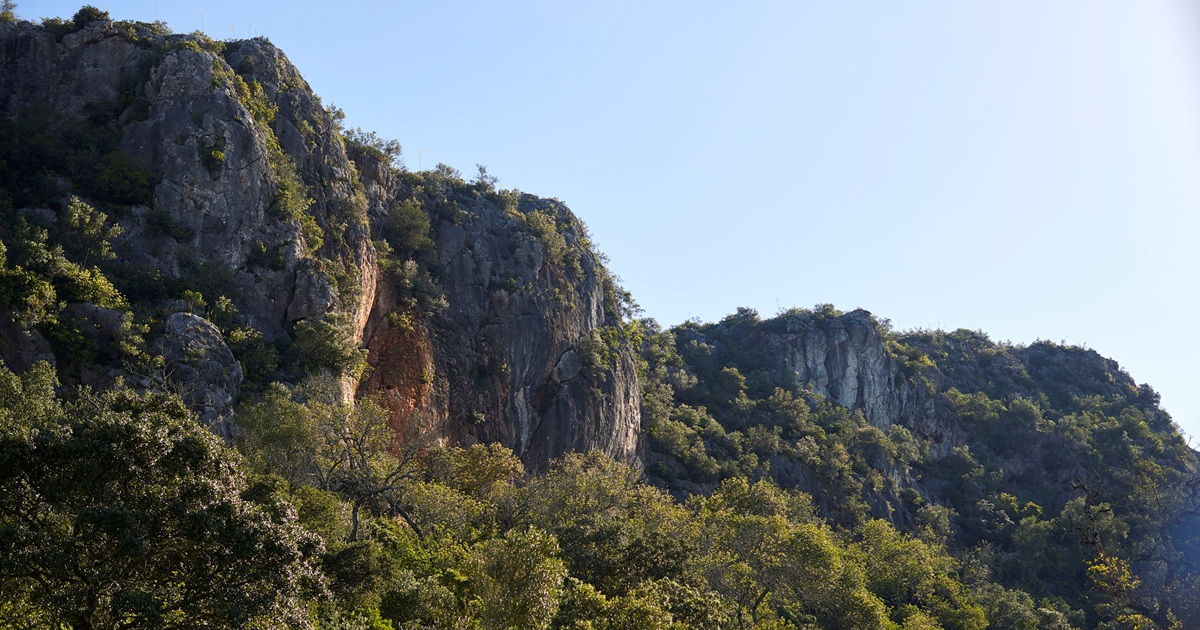
Rocha da Pena is the limestone ridge that rises between Salir and Benafim, right where the gentle Barrocal farmland gives way to the Serra do Caldeirão. No beach, no bar, no queue – just a tabletop of rock, wind, and a view that makes the whole coast look flat by comparison. The Câmara de Loulé protects it as a Local Protected Landscape covering about 637 hectares, set up to look after the geology, the scenery, and the wildlife of what is one of the Barrocal’s real geological landmarks. Official page: Rocha da Pena Protected Local Landscape (also in Portuguese), and trail notes from Visit Algarve. For enquiries, the listed phone is, and the trail-access pin sits near Rua dos Compadres 5.
The plateau itself runs about 2 km long, with a cornice around 50 m high dropping away on one side and a summit of 479 m at the Talefe. Centuries of karst erosion have carved cracks, sinkholes, and caves into the rock, including Algar dos Mouros, and the ground underfoot is rough lapiez limestone that will punish flip-flops. It’s open countryside around the clock, but this isn’t a night walk – go in daylight, when you can actually see where you’re putting your feet.
Hiking the PR18 LLE
The classic route is the signposted PR18 LLE circular walk, roughly 6.5-7 km and about 2-3 hours once you factor in the view stops. You climb from near Café / Bar das Grutas up onto the tabletop, then follow rocky paths along the cornice – Serra views to the north, Barrocal orchards spread out to the south. Detour to the Talefe trig point if you want the highest word in on the view, then drop back down through Penina and quiet farm lanes to where you started.
Be honest with yourself about the opening climb: it’s steep, the karst on top is uneven, and any clay you cross turns slippery fast after rain. And the heat is no joke either – on bare limestone with zero shade, midsummer is genuinely risky. Start at first light if you’re set on a July visit, or better, save this one for autumn, winter, or spring, when the light is softer and the walking is actually enjoyable.
Mountain biking
Local riders use the wider dirt approach tracks and the surrounding Barrocal network for climbs and ridge loops – it’s a good add-on if you’re already bringing a bike inland. The plateau path itself, though, is loose and exposed, better suited to hiking boots than a wobbly hire bike. If you do ride up, give the cornice edges proper respect and stay on the signed tracks – straying off them chews up protected scrub that takes years to recover.
Rock climbing
This is the Algarve’s main inland sport-climbing crag, and it’s a serious one: south-facing limestone sectors run the length of the ridge, with well over 100 routes spanning easy mid-grades right up into the harder end (roughly French 4 through the 7s and 8s, depending on the sector). Climb in autumn, winter, or spring – the south-facing walls bake in summer heat.
Nesting birds come first here. From roughly January to June, keep an eye out for closure signs on individual routes and sectors – raptors and other cliff-nesting birds get priority in a protected landscape, and that’s non-negotiable. Check current local topos before you go and respect any taped-off lines, even if the route looks empty.
Flowers, flora, and wildlife
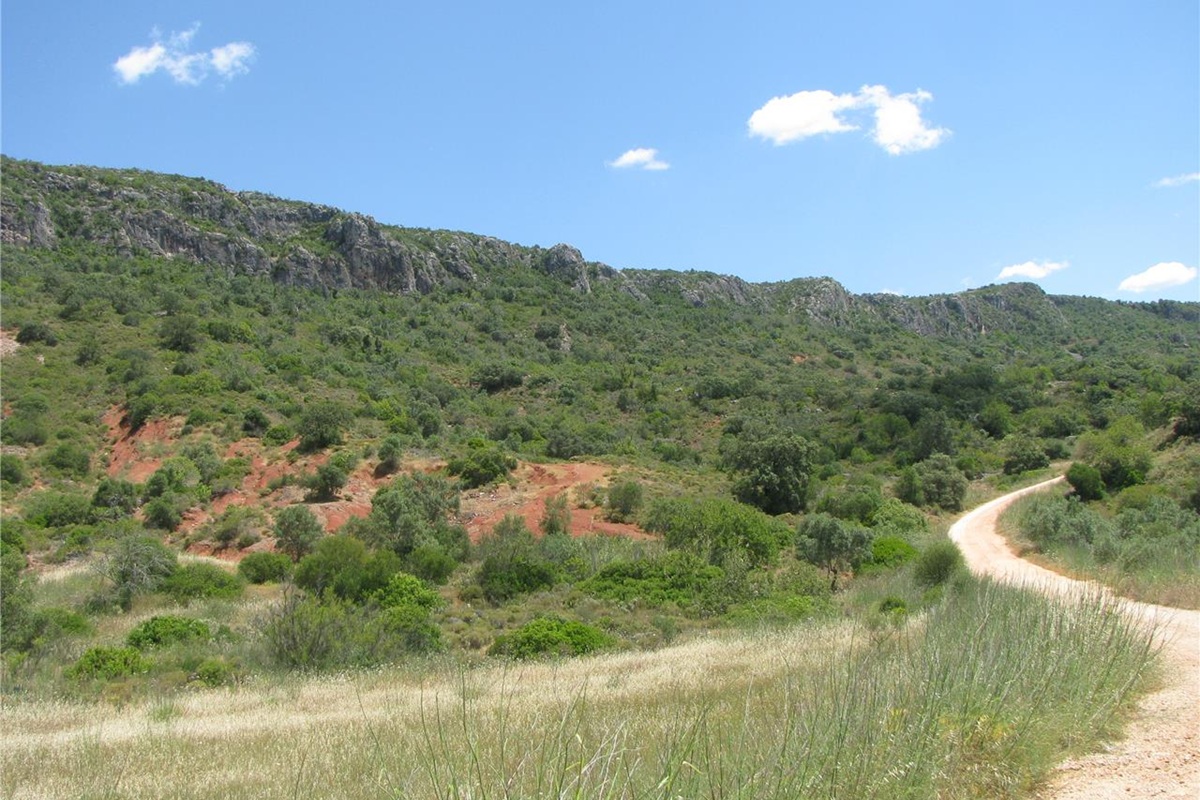
Three microclimates are stacked on one small ridge: shady, acidic north slopes holding cork oak, bay, and Portuguese heath; a hot, alkaline limestone south face; and an arid, red-earth plateau on top. That mix is why such a small area supports hundreds of plant species – guides often cite 400 to 500-plus – including lavender, thyme, and rosemary scrub, dwarf palm, wild peonies (Paeonia broteroi), bee orchids (Ophrys), and the rare Portuguese endemic daffodil, Narcissus calcicola. If flowers are the reason you’re coming, aim for roughly January to April, when the plateau is at its best.
Birdwatching here is a genuine draw, not a footnote you skip past. Expect warblers working the scrub, bee-eaters over the summer cliffs, and raptors riding the cornice thermals – buzzards are around year-round, with seasonal chances of booted eagle, short-toed snake-eagle, and the occasional griffon vulture passing through on migration. Bonelli’s eagle has been recorded, though it’s a rare sighting. Bring binoculars, keep your voice down near the cliff edge, and leave Algar dos Mouros alone – bats use the cave, and they don’t need company.
There’s a thin layer of history up here too: Iron Age wall remnants and Moorish legends cling to Algar dos Mouros, worth a nod once you’re already on the plateau rather than a reason to come on their own.
Who should go
Hikers and birders willing to drive inland from Loulé, Vilamoura, or Albufeira for a half-day that has nothing to do with sand. Climbers chasing real limestone sport routes away from the sea cliffs. Mountain bikers who want to use the wider Barrocal tracks as part of a longer ride.
Skip it with toddlers who need a flat, buggy-friendly promenade, on a July afternoon without a dawn start, or if you’ve only got one beach hour left in the day and nothing to spare. Want an easier, shadier inland walk instead? Try Benémola Spring.
Practical tips
A car is essential from the coast – there’s no bus stop for this one. Park near the trailhead at the Bar das Grutas area and follow the PR18 waymarks from there. Pack sturdy shoes, plenty of water, sun cream, and a hat, even on a mild day; there’s nowhere to hide from the sun once you’re on top. Round off the walk with a stop in Benafim village – Restaurante Hamburgo for a proper sit-down plate, Snack Bar Ponto de Encontro for coffee and something simple, or Bruno’s Bar if you’re staying for a drink – all without racing back to the marina.
Worth it?
Yes – this is Loulé’s flagship inland nature half-day: a real protected landscape, a proper hike, flowers if you time it right, birds overhead most of the year, and world-class inland climbing if that’s your sport. For more context, read the Loulé guide and where to stay in Loulé. Additional walking notes: Walk Algarve.
Next: Pair the walk with a village meal in Benafim – Restaurante Hamburgo or Snack Bar Ponto de Encontro – then check Castelo de Loulé if you want a second, cooler stop on the same inland day.